
The Story Of Hundred And Eight Years

The first hospital was built after the invasion of the British troops on 9 June 1900 at the Corner Rissik and Tom Streets; it was a military hospital and was known as the South African Constabulary Military Hospital. After the closure of this hospital on 31 May 1902, there were several unsuccessful attempts to take over and make the hospital available for the civilians.
The possible erection of the hospital was discussed in a meeting chaired by the Magistrate in December 1902. In August 1906, Doctor Hay Reynolds wrote a letter to the Potchefstroom Chronicle pleading for a civil hospital in Potchefstroom because he sent a patient with severe injuries to the Military Hospital and received a notice indicating that unless he pays the account by a certain date, legal actions will be taken against him.
The “Hospital Committee” was elected at a meeting in November 1909 and the responsibility of that committee was to raise funds for the erection of the hospital. A sum of R 5 200.00 was raised.
Our History
There was joy and appreciation as the community watched the building of the hospital slowly reaching completion. The hospital was officially opened on 29 July 1914 by Lady Murray, a wife to Lieutenant General Sir J.W. Murray, the Commander in Chief of the British Troops. The hospital had 7 beds for Whites and no provision was made for the Blacks.
The first Superintendent was Doctor G. Hodge with Ms. E. Fuller as a temporary Head Nurse (Matron) and later replaced by a permanent Head Nurse, Sister E. Lewin. There was also Staff Nurse Wessels who was then replaced by Ms. E. Else and Assistant Nurse, Ms. Sutherland. According to the Provincial Regulations, the Hospital Board was in charge of the hospital.
During the war in October 1914, the army took charge and handed over to the board in February 1915. The hospital provided excellent services and the first annual report stated that 95 patients were treated of which 31 were military, 14 town, 4 district and 1 out of the boundaries of the district. During the first meeting of the board on 30 June 1915, there were discussions of an urgent need for a hospital for the blacks and churches were requested to raise funds.
There was a tender to build a hospital in 1917 but the prices were too high and were not accepted by the board. The Superintendent, Dr. Hodge had to relinquish his post during the First World War to serve abroad and was succeeded by Dr. R. Friel who was later replaced by Dr. F. Pirow. The 1918 influenza epidemic had an impact on the hospital; tents had to be erected in the hospital to accommodate patients. The nurses could not cope and students from the Agricultural College and soldiers sent by the Cape Corporal had to assist.
Professor and Ms. Kamp offered their garden to be used as an open air hospital for less critical patients. The Matron’s family in Dodrecht was also attacked by flu and her request for leave was declined because her services were urgently required. She and the others had to sacrifice to combat the feared epidemic; their selfless service was noted in the minutes of the Hospital Board.
The fear for the recurrence of the epidemic or a similar crisis was so great that at the first board meeting in 1919, a decision was taken to consult the Department of Education about the possibility of evacuating certain buildings at the Girls High School to be used as a “Specialized Hospital”. The Western Transvaal Rugby Union pledged to donate the proceedings of their annual matches to the hospital. The first donation of R34.00 was received at a board meeting in May 1919.
The board then decided that if the Rugby Union can donate R20.00 annually then free hospital treatment will be given to members of the union injured in any match or practice held under the auspices of the union during the hospital year to which donation relates provided that such treatment does not exceed 40 days. The epidemic also taxed the financial resources of the board leading to a deficit of R406.00.
A total of 579 patients received treatment and there was an average of 12 patients per bed per day with only 7 beds during the first 5 years as an indication for a need to expand. A great wish was fulfilled towards the end of 1919 when the black section of the hospital started to function. The former Superintendent, Dr. Hodge; who had been serving at the war resumed duties in December 1919.
The board’s meeting in January 1920 discussed the question of fees for the “native” patients because it was clear that they could not pay the same fees as whites but could not be given free hospital treatment. The 1920 annual report indicated that 140 whites and 14 “Natives” were treated. There was also an improvement in the finances as a substantial amount was carried over. The hospital later experienced financial problems, the financial report indicated that 69% of patients could not pay and had to be treated as free patients.
In the meantime, the staff compliment increased and the number of patients treated went up to 124 and 129 operations were performed. There was an urgent need for expansion and have better facilities to accommodate the increasing number of patients. An amount of R1000.00 was needed to cover the costs and the unavailability of the required capital did not dampen the spirit of the committee and the Superintendent received an instruction to consult an architect and report the outcome in the next board meeting.
The lack of funds and the laws which prevented them from getting the subsidy from the province did not deter them from achieving their goal and their attempts were rewarded through an overdraft from the bank, when the nurses’ residence and a new wing of the hospital were officially opened on 20 November 1924.
In his farewell message, the Magistrate, Mr. H. Britten, a committed member of the board said that he hoped that the time will soon come when the institution will be free of financial difficulties. He also emphasized the need to extend the hospital in order to accommodate the natural growth process.
In 1928, news that the provincial subsidy was to be increased from R500.00 to R2200.00 per year were received with great enthusiasm by the board. The money was spent for improvements in the hospital and to purchase a modern operating table for R30.00. An electrical sterilizer for dressing towels and other articles were installed thus moving away from sterilizing through boiling items on a stove in the kitchen.
During the same year, an amendment in the composition of the board was made and this ordinance gave the Provincial Government more control over the hospital.
There were few reasons for complaints throughout the years but it became necessary for the board to address some irregularities with the matron towards the end of 1929. An amount of R12.59 was spent to purchase 5 gallons of wine that Christmas, staff and patients had a joyous celebration and the board was dissatisfied.
Following an intensive investigation, there were findings; the matron’s admission were such that the members concerned could not allow this matter to pass without expression of their greatest disapproval of the way in which the order was given. A public institution supported by public contributors cannot spend the public’s money in such a way.
Due to previous complaints over liquor, the board decided to institute strict measures and the following resolution was accepted: “That liquor be ordered by the Medical Superintendent only in quantities that he may deem fit and for which he will account to the board. At the time the liquor was given to the patients as a ‘medical comfort’ reward”.
Provision was also made for staff recreation. A tennis court was built in 1930 and it was a joyful day with an entertaining function when the tennis court came into use. During the course of 1930, the hospital received a donation from the university students who had a big “Rag” and the community was willing to give something because the income generated was to be given to the hospital committee.
The management was so grateful because renovations had to be done for the hospital and nurses’ residence. Accommodation remained one of the board’s main problems, the daily average of patients had doubled and the native section was overcrowded. The board managed to raise some funds and the cornerstone for the “Whites” hospital was unveiled on 5 June 1943.
Only three serious complaints about the staff were received during the first 17 years and the board did not hesitate to investigate and refer the complaints to the higher authority of the province. These were the outcome of investigations: “We have to inform you that the Committee of enquiry finds that no blame can be attached to Potchefstroom Hospital or staff in connection with this matter”.
There were plans to extend the nurses’ residence with the aim of training nurses in Potchefstroom in future. These plans were discussed and accepted with great enthusiasm but could not be fulfilled because of the economic depression.
On 10 September 1946, Article 13 of the Ordinance made provision for the Provincial Government to take over the control of the hospital. The board was then relinquished of the task of raising funds but remained responsible for the administration. The hospital experienced a crisis similar to that of flu epidemic in 1918 in the form of an enteric fever.
The situation was so serious that the Red Cross Association from Johannesburg had to borrow Potchefstroom Hospital an extra ambulance and 4 black nurses were also sent to assist because the blacks were mostly affected. The situation was fortunately timeously controlled and did not cause much suffering as the flu epidemic.
One outstanding feature of the early history is the fact that the same group of people were prepared to offer their services to serve as board members from year to year, there were minimal changes over the years. The hospital also lost its rural characteristics during that period.
The fruit trees and vegetable gardens were prominent features of the hospital. The vegetable garden provided fresh vegetables at minimal cost but the board received instructions to stop the growing vegetables. The School of Nursing Science, the B.A. Nursing Course in January 1966 with 5 students were placed at Potchefstroom, Klerksdorp, Witrand and Krugersdorp Psychiatry Hospitals.
PATIENT DAYS
PERIOD | TOTAL PATIENTS | AVAILABLE BEDS |
1962 – 1963 | 51 320 | 179 |
1963 – 1964 | 53 097 | 179 |
1964 - 1965 | 55 636 | 179 |
OPERATIONS
PERIOD | TOTAL |
1962 – 1963 | 1298 |
1963 – 1964 | 1608 |
1964 – 1965 | 1910 |
June 1976 - The hospital started with the extension of the existing buildings. The additions included the Casualty, Admissions, X-Ray Department, Central Sterilizing Department, and 30 Beds Maternity Ward. 3 Wards each with 33 beds and 4 Operating Theatres.
May 1981 - The hospital was officially named Kalie de Hass.
1986/1987 – The hospital started building 4 wards for the Blacks, Coloureds and Indians.
1987 – 5 beds high care was used as a High Care Unit, the first in the history of the hospital.
December 1988 – The Service Level Agreement (SLA) for the use of 32 beds by the South African National Defence Force was signed between the Transvaal Provincial Administration and SANDF. The hospital then started with community health service for the discharged chronic White, Black, Coloured and Indian patients.
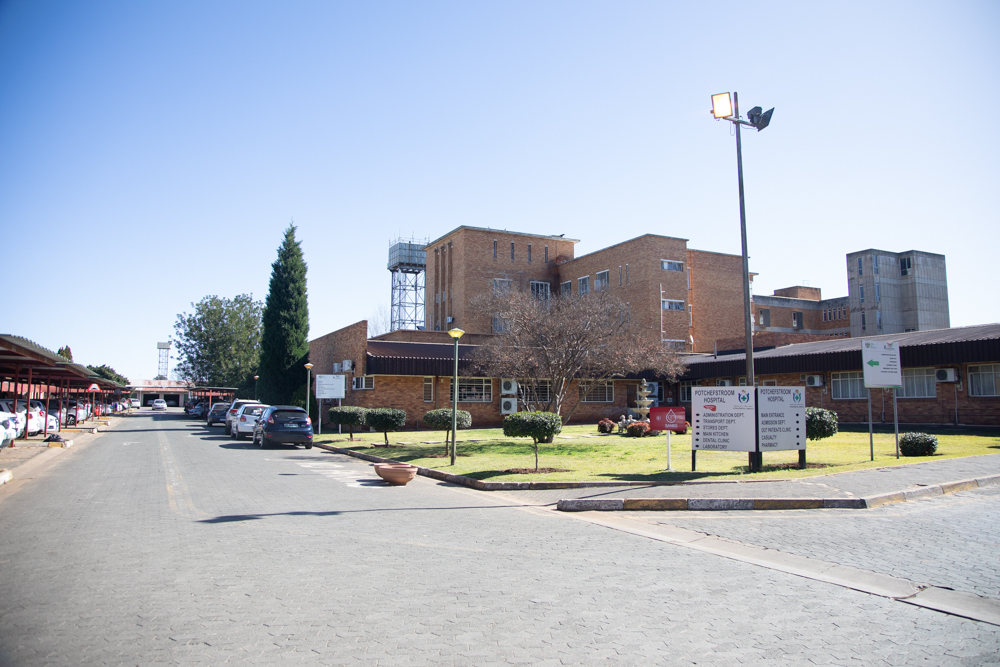
1994 – The hospital was renamed Potchefstroom Hospital
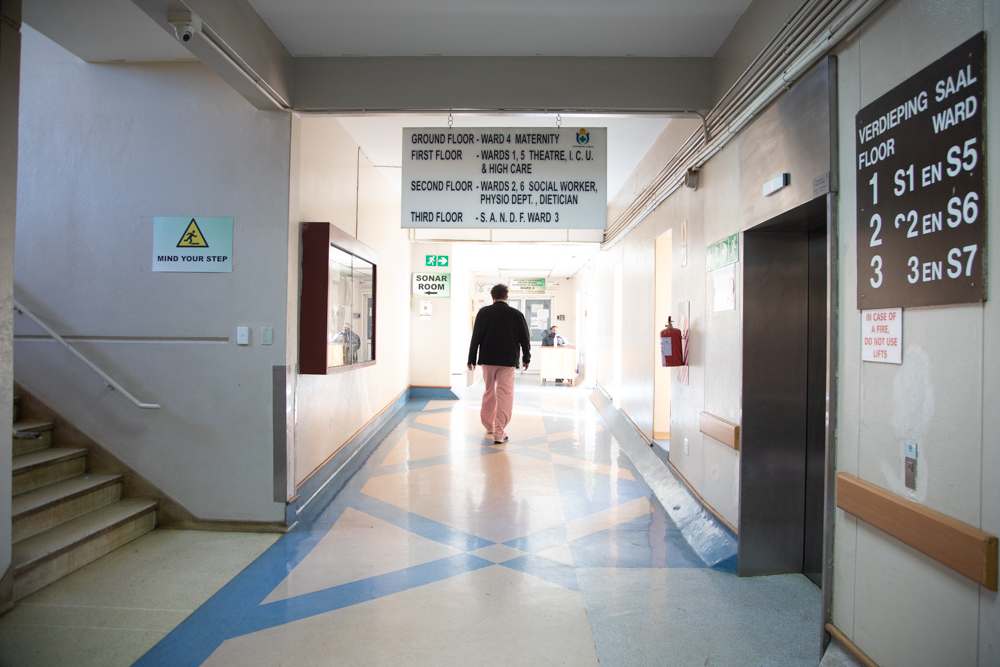
Through transformation process, the hospital was integrated in 1997 into one hospital servicing diverse community under one roof. In 2003, the contract was awarded for the upgrading of the hospital and the following upgrading were successfully done: Extension of the entrance foyer to increase waiting area, creation of the new Out-Patient Department (OPD) area, re-painting of walls and ceilings, creation of the Kiosk and waiting area for Casualty Department, relocation of the Blood Bank (South African National Blood Services) converting half of Ward 5 to accommodate private patients and other half for Adult and Neonatal Intensive Care Unit (ICU).
02 March 2012, Potchefstroom Hospital was gazetted by the National Department of Health to be a Regional Hospital (Level 1 & 2) patient care with 335 approved and usable beds.



Previous
Next
VISION
Healthy self reliant communities in the North West Province
MISSION
To render accessible, equitable and integrated quality health and developmental social services.
VALUES
In rendering such services we shall observe values contained in the following:
- Batho Pele Principles
- Patients' Rights Charter
- Victims Rights Charter
- Children’s Rights Charter
- Disability Rights Charter
- Older Persons Pledge
- Public Service Principles
- Accountability and Transparency
- Community participation
- Excellence, Caring, and access
- Human dignity and respect.